

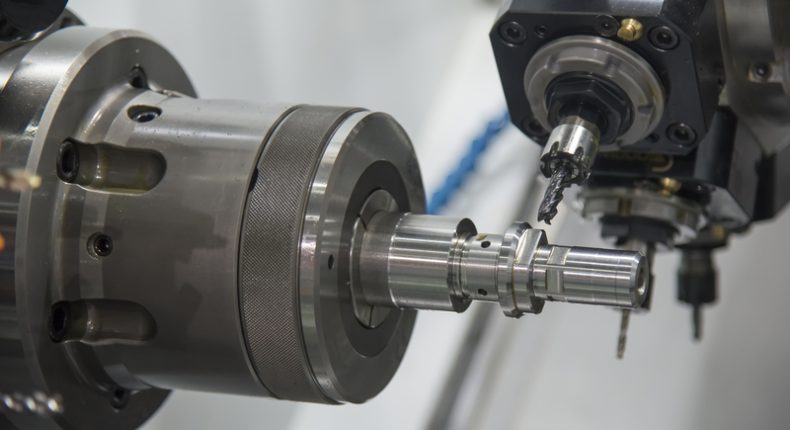
Machining has always been a cornerstone of industrial manufacturing. For decades, traditional machining methods relied heavily on manual operation, skilled machinists, and mechanical controls to shape metal components. While these methods played an important role in manufacturing history, today’s production demands require higher precision, faster turnaround, and greater consistency than traditional processes can reliably deliver.
This is where CNC machining has transformed the manufacturing landscape. Computer Numerical Control (CNC) machining uses programmed software to control cutting tools and machinery, allowing manufacturers to produce complex parts with exceptional accuracy and repeatability. For foundries and manufacturers like Cast Technologies, CNC machining enables tighter tolerances, improved efficiency, and superior part quality across a wide range of applications.
One of the most significant advantages of CNC machining over traditional machining is precision. Traditional machining relies on manual adjustments and operator skill, which can introduce variability from part to part. Even experienced machinists may see minor inconsistencies over long production runs.
This level of precision is especially critical for industries such as aerospace, defense, power generation, and industrial equipment manufacturing, where small deviations can impact performance, safety, or assembly fit.
Traditional machining methods often require constant monitoring and adjustment to maintain consistency. CNC machining, on the other hand, produces identical parts repeatedly once a program is established and validated.
This consistency provides major advantages for manufacturers who require:
For OEMs and Tier suppliers, repeatability ensures smoother assembly processes and fewer downstream issues, improving overall production efficiency.
CNC machining dramatically improves production speed compared to traditional manual machining. Once programmed, CNC machines can operate continuously with minimal intervention, allowing manufacturers to meet demanding production schedules.
This efficiency helps reduce lead times while maintaining high-quality standards, making CNC machining ideal for both short-run production and large-scale manufacturing programs.
Traditional machining methods can struggle with intricate geometries, tight internal features, and multi-sided components. CNC machining excels in these areas by enabling precise, multi-axis movements that would be difficult or impossible to achieve manually.
CNC technology allows manufacturers to:
This capability is particularly valuable for machined castings, where complex shapes are often required for performance, weight reduction, or space constraints.
While skilled machinists remain essential in CNC operations, the technology significantly reduces dependence on constant manual control. Traditional machining requires continuous operator involvement, increasing labor costs and limiting scalability.
CNC machining shifts the focus toward:
This allows manufacturers to maximize workforce efficiency while maintaining high production standards, even as skilled labor becomes harder to source.
Manual machining exposes operators to rotating tools, sharp edges, and moving machinery. CNC machining enhances workplace safety by limiting direct operator interaction during cutting operations.
Safety benefits include:
A safer shop floor not only protects employees but also reduces downtime and liability for manufacturers.
CNC machining integrates seamlessly with modern CAD and CAM software, allowing digital designs to move directly into production. This digital workflow minimizes errors between design and manufacturing while accelerating time to market.
Benefits of digital integration include:
For manufacturers producing precision castings and machined components, this integration ensures parts meet exact specifications from concept through completion.
While CNC machining equipment represents a higher initial investment than traditional machines, the long-term cost benefits are substantial. Reduced scrap, faster production, fewer errors, and lower labor dependency all contribute to improved cost efficiency.
Over time, CNC machining helps manufacturers:
These savings make CNC machining a strategic investment for companies focused on quality, scalability, and long-term growth.
For foundries that offer both casting and machining services, CNC technology adds significant value. Machining cast components in-house ensures precise final dimensions, better surface finishes, and improved quality control.
At Cast Technologies, CNC machining complements aluminum and iron casting operations by delivering production-ready components that meet exact customer specifications. This single-source approach simplifies supply chains and ensures consistency from raw casting to finished part.
The shift from traditional machining methods to CNC machining represents a major advancement in manufacturing efficiency, precision, and reliability. CNC machining enables manufacturers to produce higher-quality components faster, safer, and more consistently than ever before.
As production demands continue to increase across industrial, automotive, defense, and energy sectors, CNC machining remains a critical technology for maintaining competitiveness and delivering dependable results.
If you are looking for precision-machined components backed by integrated foundry expertise, Cast Technologies provides complete casting and CNC machining solutions designed to meet modern manufacturing demands.

Top quality casting and services via our in-house foundry & machine shop