

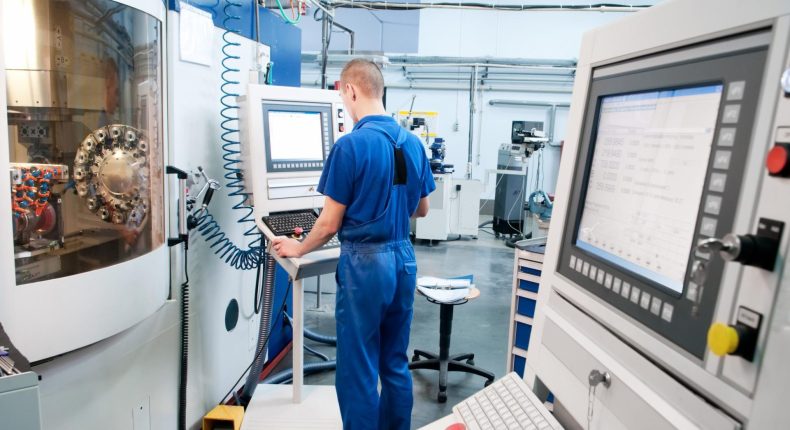
CNC machining has become a cornerstone of modern manufacturing due to its precision, consistency, and efficiency. At the heart of every successful CNC operation is accurate programming. CNC programs control tool movement, cutting speed, depth, and sequencing, ensuring parts are produced exactly as designed.
Whether machining aluminum, iron, or steel components, proper CNC programming directly impacts part quality, cycle time, and tool life. Understanding how CNC machines are programmed provides valuable insight for engineers, machinists, and manufacturers evaluating CNC machining capabilities.
The CNC programming process begins with Computer-Aided Design (CAD). CAD software is used to create a precise digital model of the part, including all dimensions, features, and tolerances.
Key considerations during the CAD stage include:
A well-designed CAD model ensures the machining process runs smoothly and minimizes errors later in production.
Once the CAD model is complete, it is imported into Computer-Aided Manufacturing (CAM) software. CAM software translates the design into toolpaths that define how the CNC machine will cut the part.
During this step, programmers determine:
The CAM system generates the machining strategy while optimizing efficiency, surface finish, and tool life.
After toolpaths are finalized, the CAM software outputs the CNC program, typically written in G-code. G-code is the language CNC machines use to interpret commands.
A CNC program may include:
This program tells the machine exactly how to move and operate throughout the machining cycle.
Before running the program, the CNC machine must be properly set up. Accurate setup is critical for part quality and machine safety.
Setup tasks include:
Careful setup ensures the CNC machine follows the programmed toolpaths accurately and avoids collisions or errors.
Most modern CNC machines and CAM systems allow program simulation before cutting begins. Simulation helps identify potential issues such as tool collisions, incorrect toolpaths, or excessive material removal.
Program verification helps manufacturers:
This step is especially important for complex parts or first-run production programs.
Before full production, a test cut is often performed using scrap material or a reduced feed rate. This allows operators to confirm dimensions, surface finish, and overall program accuracy.
During test runs, machinists check:
Any necessary adjustments can be made before running full production.
Once the program is verified and approved, the CNC machine can run production parts. CNC machines excel at producing consistent, repeatable components over long production runs.
During production, operators monitor:
Automated CNC systems may run continuously with minimal intervention, improving efficiency and throughput.
Quality control is a critical final step in CNC machining. Finished parts are inspected to ensure they meet all dimensional and functional requirements.
Inspection methods may include:
Consistent inspection ensures CNC-machined components meet customer specifications and industry standards.
There are several approaches to CNC programming, depending on complexity and production needs:
Most modern manufacturing environments rely heavily on CAM-generated programs for efficiency and accuracy.
Effective CNC programming improves more than just part accuracy. It helps manufacturers:
For manufacturers machining cast components, proper programming ensures final dimensions, flatness, and critical features meet exact specifications.
Foundries that offer in-house CNC machining benefit significantly from strong programming expertise. Machining cast components internally allows for precise control of final dimensions and reduces reliance on outside vendors.
At Cast Technologies, CNC programming works hand in hand with aluminum and iron casting operations to deliver production-ready components that meet exact customer requirements.
Programming a CNC machine is a structured process that combines design, software, machine setup, and quality control. Each step plays a vital role in achieving accurate, repeatable, and efficient machining results.
As CNC technology continues to advance, programming expertise remains a key driver of manufacturing quality and competitiveness. Understanding how CNC machines are programmed provides valuable insight into the precision and reliability behind modern machined components.

Top quality casting and services via our in-house foundry & machine shop